Spring Mountain Districts 2026 Harvest Finishes
Early and light


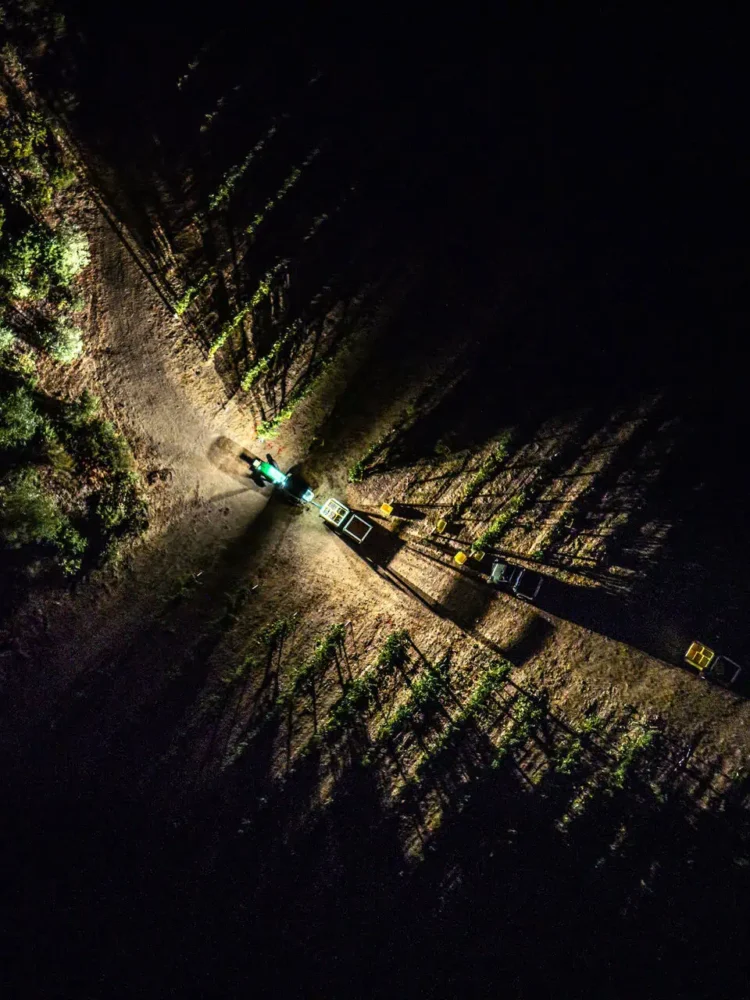

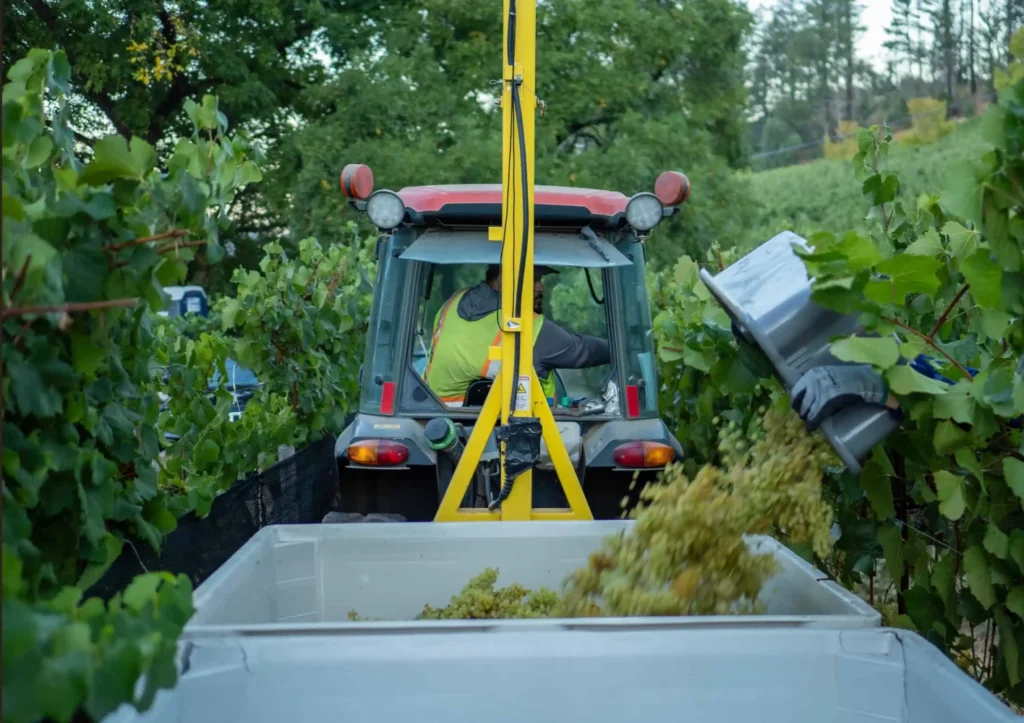



ST. HELENA, California — October 2026 — The 2026 harvest on Napa Valley’s Spring Mountain District delivered a season of contradictions: an unusually early start, historically light yields at many properties, bursts of heat, and ripening patterns that sometimes defied growers’ expectations. Yet across the mountain, vineyard teams responded with careful picking decisions, patience and close attention to individual blocks—and reported fruit with impressive concentration, flavor and promise.
The season began early at several properties, with RARECAT picking Grenache on August 3 and Aadland-Moody bringing in Sauvignon Blanc on August 6. At Spring Mountain Vineyard, the first Sauvignon Blanc arrived August 10; Keenan Winery began with Chardonnay on August 13. Other growers started later, and the harvest extended into October, with Cabernet Sauvignon among the final varieties picked at several estates.
For many, the headline was the size of the crop. Vineyard 7 & 8 reported historically low yields, while Smith-Madrone described a harvest that “started light, stayed very light through all varieties.” Spring Mountain Vineyard estimated its crop was about 20 percent lighter than 2025. Fe Wines reported yields approximately 20 percent below its average, with smaller clusters contributing to greater skin-to-juice ratios, intense flavor concentration and deep color.
But low yields were only part of the story. Growers also described fruit that handled heat well and sometimes required a longer hang time than the early season suggested. The result will be wines that express the individuality of the Spring Mountain District’s elevations, exposures and microclimates.
An early start, followed by a season that refused to follow the script
Paloma started harvest on September 28 and finished with Cabernet Sauvignon and Merlot on October 10. Laura Williamson explained that “it was a rather light harvest overall due to rain in spring. We are mostly happy with the fruit that came in; the flavor was fruity and a bit more acidic than usual.”
At Smith-Madrone, the first Riesling was picked August 17. Flying Lady Winery also began on August 17, bringing in Pinot Blanc destined for sparkling wine. Cain picked Riesling on August 18, and Fe Wines began its harvest with Malbec on August 24.
For some growers, the season’s early start was a record. Keenan Winery reported that its August 13 start was the earliest the winery could recall—two weeks ahead of its previous record. Smith-Madrone described its start as the earliest in living memory.
Yet an early start did not necessarily mean a quick or straightforward harvest. Spring Mountain Vineyard characterized 2026 as a “fits and starts” season, with periods of urgency followed by pauses. Its estate director, Garrett Hales, described a low-yield, high-quality vintage in which the fruit sometimes came on quickly in some areas but required continued attention elsewhere.
At Barnett Vineyards, winemaker David Tate reported that the winery’s first day of harvest was on September 21, with Cabernet Franc. It was Tate’s earliest start to harvest in his 20 years at the winery. Barnett will be finishing on October 20.
At Vineyard 7 & 8, a prolonged flowering period in spring contributed to a drawn-out picking season. Winemaker Wesley Steffens said the winery had to wait for individual blocks and sub-blocks to achieve physiological ripeness and tannin development. What normally unfolds over a few weeks after red-fruit picking begins stretched to four to six weeks this year.
“Patience was incredibly important,” Steffens reported. Short bursts of heat, followed by cooler periods, allowed the fruit to remain on the vine until it reached the ripeness and texture the winery wanted. The winery finished harvest on October 7.
That patience was echoed at Flying Lady, where winemaker Leigh Meyering observed substantial variation in ripening across vineyards, making harvest decisions particularly challenging. Flying Lady picked its first fruit, Pinot Blanc for sparkling wine, on August 17 and brought in its final grapes, Cabernet Franc, on October 10. Meyering summed up the vintage in three words: “Warm, light (with respect to yields), challenging.”
Smaller crops, concentrated fruit
Across the Spring Mountain District, reduced yields were a recurring theme.
At Ritchie Creek, owner David Gibbs attributed a smaller crop in part to “the combo of a heat spike, followed by crazy winds, and a bit of rain early in the spring,” which caused considerable shatter. The vineyard began picking on August 14 with a quarter-ton of dry-farmed, old-vine Blaufränkisch and finished on September 2, bringing in 3.5 tons of Cabernet Sauvignon.
For Gibbs, the season had a special significance: it marked the first vintage in 19 years for a branded Ritchie Creek Vineyard wine. He described the harvest as one that went off without a hitch, adding that the fruit had the potential to produce a structured wine reminiscent of the bottles made by former winemaker Pete Minor in the 1970s and 1980s.
Fe Wines also reported a lighter crop. Its Malbec came in August 24, followed by Cabernet Sauvignon, Petit Verdot and Cabernet Franc on September 15. General Manager, Joseph Filippini, reported yields about 20 percent below the winery’s average. Smaller clusters produced a higher skin-to-juice ratio, helping deliver intense flavors and deep color.
At Smith-Madrone, the harvest’s lightness persisted across varieties. Winemaker Charles Smith called the season an anomaly in a string of anomalous years, observing “it is becoming difficult to remember what a normal harvest looks like.”
Spring Mountain Vineyard also found its crop about 20 percent lighter than expected based on earlier estimates. Still, the estate’s broad range of elevations and microclimates offered a diverse palette for blending. Hales noted that the mountain’s varied sites provide blending options not found on the Valley floor. Meanwhile, the winery’s team is overseeing a substantial replanting effort, with more than 100 acres being planted or replanted.
At Vineyard 7 & 8, Steffens described the combination as “historically low yields” paired with fruit of “incredible depth and concentration.” The winery’s three-word assessment was “Small. Mighty. Patient.”
At Cain, it was an early and light harvest, with exceptional quality and the promise of expressive, complex wines. Cain began picking Riesling on August 18 and finished with Cabernet Sauvignon on October 1.
At Aadland-Moody Sauvignon Blanc was the first variety picked on August 6, while the last variety, Cabernet Sauvignon, ended the winery’s harvest on October 19. Owner Justin Moody described the season as “early and light,” reflecting the weather and shatter, but said the mountain still produced “amazing fruit, just not as much of it.”
Spring Mountain’s own timetable
The difference between the Spring Mountain District and the Valley floor emerged as one of the season’s defining observations. While the mountain began early in some respects, growers described a more complex progression of ripening once the fruit was on the vine.
At Frias, which began picking Cabernet Sauvignon on September 7 and finished September 29, the season also stretched longer than initially expected. The winery saw even ripening, good balance and maturity at lower sugars. What first appeared likely to be an exceptionally early, fast harvest instead held on and allowed fruit to ripen more gradually.
Harvest rituals
The season’s challenges did not prevent growers from finding reasons to celebrate.
At Ritchie Creek, Gibbs opened a bottle of 1974 Ritchie Creek—the vineyard’s first vintage—after the harvest and paired it with fried chicken from Charlie’s.
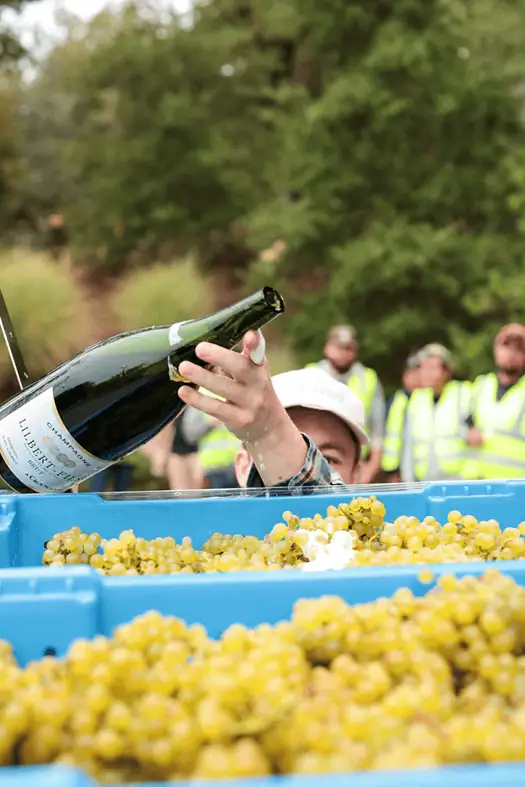
At Flying Lady, the first bin of grapes is always an occasion. Because Pinot Blanc is the first fruit into the winery, the team opens a bottle of sparkling Pinot Blanc from a previous vintage and shares a toast with the first bin.
Keenan Winery, which began with Chardonnay on August 13 and finished with Mataro on October 2, marked the close of harvest with its traditional steak lunch. The winery described extremely low yields as one of the season’s biggest surprises.
At Cain, the team held pre- and post-harvest parties. Pride Mountain Vineyards, which began with Chardonnay on August 31 and finished with Cabernet Sauvignon on October 12, continued its first-day tradition of opening Champagne and pouring a little over the first bin.
Vineyard 7 & 8 has a ritual of enjoying a Champagne toast with the winery team and families on the first day of the Chardonnay harvest.
At Fe Wines, the vineyard crew is treated to breakfast tacos from Ray Ray’s during picking, followed by In-N-Out Double-Doubles later in the season.
Finishing
RARECAT, Smith-Madrone and Frias finished Cabernet Sauvignon on September 29. Cain finished Cabernet Sauvignon on October 1; Keenan Winery concluded with Mataro on October 2; and Spring Mountain Vineyard brought in its last Cabernet Sauvignon on October 6. Vineyard 7 & 8 finished with Cabernet Sauvignon on October 7, while Flying Lady finished with Cabernet Franc on October 10. Pride Mountain Vineyards completed its harvest with Cabernet Sauvignon on October 12.
To summarize the reports from all over the Spring Mountain District, 2026 was a season in which low yields, heat events and uneven ripening demanded careful decisions. Growers described concentrated flavors, good balance, expressive character and the opportunity to let individual mountain sites speak for themselves.
As Meyering put it, the Flying Lady vintage was “warm, light” and “challenging.” Across the Spring Mountain District, the word may have been “patience.”
About The Spring Mountain District Association
Based on the western slopes above the town of St. Helena, the Spring Mountain District Association represents wineries and vineyards in Napa Valley’s Spring Mountain District, a mountain appellation known for its varied elevations, steep terrain, distinctive growing conditions and estate-grown wines. There are currently about 30 vineyards and wineries in the appellation, encompassing approximately 1,000 acres of vineyard. With a unique identity formed over one and one half centuries, the Spring Mountain District appellation became an official AVA in 1993. Apart from its vineyards the region is known for its wide array of mixed hardwood forests, which include oak, madrone, Douglas fir, redwood, tan oak and conifers. The AVA is known for its steep vineyard blocks, which span slopes up to 30% at elevations between 200 and 2,250 feet.
The Spring Mountain District AVA is primarily reached via Spring Mountain Road in St. Helena; some wineries in the AVA are located off Hwy. 29 north of St. Helena. Spring Mountain Road provides dramatic vistas as the road curves to the top of the AVA. Heavily forested, the area does not feel commercial, in that there are relatively few wineries, most of which are not visible from the Road. Wineries here grow Cabernet Sauvignon, Merlot and Chardonnay, as well as outstanding Riesling, Sauvignon Blanc, Viognier, Syrah and Zinfandel.